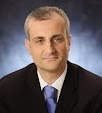
Thomas Friedman has a way of getting attention with provocative statements and inaccurate facts. His new recipe for solving the Arab-Israeli conflict (“What to do with Lemons,” NY Times, 18 June 2011) is a case in point.
When Friedman claimed that “The World is Flat” in his 2005 book on globalization, all he meant, obviously, was to get a catchy title. The book begins with the story of Christopher Columbus, who set out to find India only to reach the Americas. Friedman claims that this proved Columbus's thesis that the world is round. Actually, proof that the world is round came later, in 1522, when the sole surviving ship from Ferdinand Magellan's fleet returned to Spain.
When it comes to the Middle East, however, Friedman’s belief that the world is flat seems to be sincere. No amount of evidence will make him budge from the dogma that the establishment of a Palestinian state along the 1949 armistice lines with bring the conflict with Israel to an end. Which is why he twists facts in order for the theory to look correct.
For a start, UN General Assembly Resolution 181 (from November 29, 1947) did not partition the British Mandate between a Jewish state and an Arab state. It only endorsed the recommendation of the United Nations Special Committee on Palestine (UNSCOP). General Assembly resolutions are not binding upon UN members. Resolution 181 became moot anyway after the Arab states rejected it and attacked Israel.
Turning Resolution 181 into a Security Council Resolution, as Friedman suggests, will accomplish nothing. Such a resolution would not be adopted under Chapter 7 of the international convention dealing with acts of aggression. It would be adopted under Chapter 6, which deals with finding a peaceful solution to international disputes via negotiations. So the Security Council would officially ask Israel and the Palestinians to negotiate. What an achievement: they’ve been doing just that, to no avail, for the past two decades.
Besides, there is already a Security Council resolution on the Arab-Israel conflict: it is Resolution 242. This Resolution does not require from Israel a withdrawal to the temporary 1949 armistice line. The future border between Israel and its Eastern neighbor is to be negotiated. When Friedman claims that “The dividing line should be based on the 1967 borders,” he not only invents a border that never existed. He also turns Resolution 242 on its head.
Aware of the fact that reverting to the 1949 armistice line is technically impossible, Friedman calls for “land swaps” that would enable “5 percent of the West Bank where 80 percent of the settlers live” to “be traded for parts of pre-1967 Israel.”
Why should there be “land swaps” when Israel is entitled, according to Resolution 242, to retain parts of the West Bank in the framework of a peace agreement? In his recent address to AIPAC on May 22, President Obama claimed that the 1967 lines with land swaps “has long been the basis for discussions among the parties, including previous U.S. administrations.” This is untrue. The only US Administration that mentioned land swaps was the Clinton Administration during the Camp David negotiations in July 2000.
Friedman concludes his op-ed by quoting Gidi Grinstein’s gloomy prediction that “September can be a confrontational zero-sum moment with potentially disastrous consequences.” Actually, Abbas is bluffing. “Palestine” was already recognized by the UN as a state in 1988. In addition, one of the conditions for state recognition in international law is to have a government. This is why Abbas tried to work out a deal with Hamas in order to put an end to the Gaza/West Bank dichotomy. With this deal falling apart, there are still two, not one, Palestinian governments.
The world is not flat, but Thomas Friedman is flat-wrong about the Middle East. “You know what they say to do with lemons?” he asks in his piece. “Make lemonade.” Well, do you know what I say to do with prima donnas whose judgment is blurred by an inflated ego? Ignore them.
Thursday, June 23, 2011
Tuesday, June 14, 2011
Twilight of the Idols
Israel’s intellectuals are worried. The Israeli Holy Trinity (Amos Oz, A.B. Yehoshua, and David Grossman) is getting old. The Hebrew University’s Pantheon (Martin Buber, Yehuda Magnes, and Yeshayahu Leibowitz) belongs to History. Avraham Burg tries to mimic Leibowitz, but it is hard to inherit the Lithuanian brainbox when you didn’t finish college. As for Shlomo Sand, Moshe Zuckermann and Ilan Pappé, only European neo-Marxists are willing to attend their lectures and to publish their books.
“It used to be that … they would call me from Army Radio” complains Moshe Zuckermann to Ofer Aderet from Ha’aretz (“The Shrinking of the Israeli Mind,” June 7, 2011). So what happened? “The people have been silenced. They tried to strangle them –and they’ve succeeded” he says. Zuckermann doesn’t specify whom he means by “they” but Daniel Gutwein blames “market forces.” You see, explains Gutwein, “The market … ensures there is no intellectual discussion.” As for Shlomo Sand, he blames the Universities themselves: “To become a professor” he says “you have to be cautious.”
One only has to look at the political makeup of Israel’s social science faculties to wonder (or, rather, to understand) what Sand means by “cautious.” As for “market forces” being the enemy of intellectual discussion, I bet Bernard Henri-Lévy would beg to differ: he flies a private jet and yet has quite an audience both at home and abroad (including in Israel). He is mostly excused for his buffoonery because, at the end of the day, he is knowledgeable, writes well, and keeps renewing his stock.
Most Israeli intellectuals, by contrast, are provincial and fossilized. Nowhere but in Israel have I seen academics and journalists who still think that mentioning Foucault and Derrida is cool. Those people have been living off the same tired mantras for decades: the occupation is the source of all evil; religion is for retards; the advent of peace depends on Israel alone. It is not that Israelis have become “anti-intellectual” or that they have been “strangled.” It is just that they are tired of hearing the nonsense of hypocritical conformists.
One noticeable exception is Yehuda Shenhav. A sociology professor at Tel-Aviv University, Shenhav expresses unorthodox views and has no qualms about being a dissident. His last book, Bounded by the Green Line (Am Oved, 2010), exposes the intellectual hypocrisy of Israel’s Ashkenazi establishment. By blaming “the occupation” for Israel’s problems, Shenhav argues, the Zionist left is lying to itself. Shenhav goes further: the Zionist left’s obsession with “the occupation” has less to do with liberalism than with nostalgia for the secular and Ashkenazi pre-1967 Israel. But for the Palestinians (and indeed, for Shenhav himself) the “original sin” is not 1967. It is 1948.
Shenhav is no right-winger trying to demonstrate the absurdity of the Oslo paradigm. He rejects this paradigm precisely because he claims that Israel was violent and racist before 1967. While tenants of the “pre-1967 cosmology” would have us believe that the Six Day War transformed Israel from “Little House on the Prairie” to “The Terminator,” Shenhav argues that “The model created in 1948 transformed Israel, for all intents and purposes, into a racial state.” Thus does he call for a return to “pre-1948” Israel, to an acceptation of the Palestinian “right of return,” and to the establishment of a Jewish-Arab federation.
I found Shenhav’s diagnosis and prognosis appalling. Pre-1967 Israel was not a “racial” state. It was (and still is) a nation-state that grants cultural preference to the dominant nation while guarantying equal civil rights to minorities, just like other democratic nation-states such as France, Japan or Sweden. And calling for a pastoral brotherhood between a Jewish minority and an Arab majority in a loose federation simply ignores History. Jews were persecuted and mistreated second-class citizens in Arab lands. Most pre-WWII Arab national movements were fascist. The first Palestinian leader, Hadj-Amin al-Husseini, was a Nazi collaborator who was personally responsible for the Jewish pogroms in Palestine in 1929 and 1936. The establishment of Israel in 1948 was more the result than the cause of Arab animosity and violence. The fact that The Protocols of the Sages of Zion and Mein Kampf are best sellers in Arab capitals and that Palestinian media and preachers describe Jews as “sons of pigs and monkeys” does not bode well for stateless Jews in Dahr el-Islam.
But Shenhav has the merit of recognizing that “the occupation” is a delusional excuse for the absence of peace, and that it is Zionism itself that the Arabs reject.
So the choice is not between occupation and peace but between Zionism and peace. Many former believers in the “pre-1967 cosmology” realize this. Some are so attached to peace that they have become post-Zionistic. Others are so attached to Zionism that they have opted for steadfastness.
Avi Shlaim and Benny Morris are the perfect examples. Both self-proclaimed “new historians” separately published a history of the Arab-Israeli conflict shortly before the implosion of the Oslo process (The Iron Wall and Righteous Victims). Both authors welcomed the election of Ehud Barak in 1999, predicting he would soon prove their theory to be right. The very opposite happened. Shlaim reacted by rejecting Zionism, Morris by rejecting the Oslo paradigm. While Shlaim now says that “Zionism today is the real enemy of the Jews,” Morris declares that “we are doomed to live by the sword.”
Morris even compares himself to Albert Camus. "He was considered a left-winger and a person of high morals, but when he referred to the Algerian problem he placed his mother ahead of morality” Morris declared to Ari Shavit in his famous 2004 interview. And so, Morris declares: “Preserving my people is more important than universal moral concepts." Boaz Neumann, a history professor at Tel-Aviv University, has used the same metaphor and has made the same point.
“Twilight of the Idols” is not only a famous book by Friedrich Nietzsche. It is also a central tenet of Judaism. Idolatry is an abomination because the worshiper knows he is lying to himself. That some Israeli intellectuals are sobering is a sign of hope. Who knows: even the Israeli Holy Trinity might eventually recognize the Holy One.
“It used to be that … they would call me from Army Radio” complains Moshe Zuckermann to Ofer Aderet from Ha’aretz (“The Shrinking of the Israeli Mind,” June 7, 2011). So what happened? “The people have been silenced. They tried to strangle them –and they’ve succeeded” he says. Zuckermann doesn’t specify whom he means by “they” but Daniel Gutwein blames “market forces.” You see, explains Gutwein, “The market … ensures there is no intellectual discussion.” As for Shlomo Sand, he blames the Universities themselves: “To become a professor” he says “you have to be cautious.”
One only has to look at the political makeup of Israel’s social science faculties to wonder (or, rather, to understand) what Sand means by “cautious.” As for “market forces” being the enemy of intellectual discussion, I bet Bernard Henri-Lévy would beg to differ: he flies a private jet and yet has quite an audience both at home and abroad (including in Israel). He is mostly excused for his buffoonery because, at the end of the day, he is knowledgeable, writes well, and keeps renewing his stock.
Most Israeli intellectuals, by contrast, are provincial and fossilized. Nowhere but in Israel have I seen academics and journalists who still think that mentioning Foucault and Derrida is cool. Those people have been living off the same tired mantras for decades: the occupation is the source of all evil; religion is for retards; the advent of peace depends on Israel alone. It is not that Israelis have become “anti-intellectual” or that they have been “strangled.” It is just that they are tired of hearing the nonsense of hypocritical conformists.
One noticeable exception is Yehuda Shenhav. A sociology professor at Tel-Aviv University, Shenhav expresses unorthodox views and has no qualms about being a dissident. His last book, Bounded by the Green Line (Am Oved, 2010), exposes the intellectual hypocrisy of Israel’s Ashkenazi establishment. By blaming “the occupation” for Israel’s problems, Shenhav argues, the Zionist left is lying to itself. Shenhav goes further: the Zionist left’s obsession with “the occupation” has less to do with liberalism than with nostalgia for the secular and Ashkenazi pre-1967 Israel. But for the Palestinians (and indeed, for Shenhav himself) the “original sin” is not 1967. It is 1948.
Shenhav is no right-winger trying to demonstrate the absurdity of the Oslo paradigm. He rejects this paradigm precisely because he claims that Israel was violent and racist before 1967. While tenants of the “pre-1967 cosmology” would have us believe that the Six Day War transformed Israel from “Little House on the Prairie” to “The Terminator,” Shenhav argues that “The model created in 1948 transformed Israel, for all intents and purposes, into a racial state.” Thus does he call for a return to “pre-1948” Israel, to an acceptation of the Palestinian “right of return,” and to the establishment of a Jewish-Arab federation.
I found Shenhav’s diagnosis and prognosis appalling. Pre-1967 Israel was not a “racial” state. It was (and still is) a nation-state that grants cultural preference to the dominant nation while guarantying equal civil rights to minorities, just like other democratic nation-states such as France, Japan or Sweden. And calling for a pastoral brotherhood between a Jewish minority and an Arab majority in a loose federation simply ignores History. Jews were persecuted and mistreated second-class citizens in Arab lands. Most pre-WWII Arab national movements were fascist. The first Palestinian leader, Hadj-Amin al-Husseini, was a Nazi collaborator who was personally responsible for the Jewish pogroms in Palestine in 1929 and 1936. The establishment of Israel in 1948 was more the result than the cause of Arab animosity and violence. The fact that The Protocols of the Sages of Zion and Mein Kampf are best sellers in Arab capitals and that Palestinian media and preachers describe Jews as “sons of pigs and monkeys” does not bode well for stateless Jews in Dahr el-Islam.
But Shenhav has the merit of recognizing that “the occupation” is a delusional excuse for the absence of peace, and that it is Zionism itself that the Arabs reject.
So the choice is not between occupation and peace but between Zionism and peace. Many former believers in the “pre-1967 cosmology” realize this. Some are so attached to peace that they have become post-Zionistic. Others are so attached to Zionism that they have opted for steadfastness.
Avi Shlaim and Benny Morris are the perfect examples. Both self-proclaimed “new historians” separately published a history of the Arab-Israeli conflict shortly before the implosion of the Oslo process (The Iron Wall and Righteous Victims). Both authors welcomed the election of Ehud Barak in 1999, predicting he would soon prove their theory to be right. The very opposite happened. Shlaim reacted by rejecting Zionism, Morris by rejecting the Oslo paradigm. While Shlaim now says that “Zionism today is the real enemy of the Jews,” Morris declares that “we are doomed to live by the sword.”
Morris even compares himself to Albert Camus. "He was considered a left-winger and a person of high morals, but when he referred to the Algerian problem he placed his mother ahead of morality” Morris declared to Ari Shavit in his famous 2004 interview. And so, Morris declares: “Preserving my people is more important than universal moral concepts." Boaz Neumann, a history professor at Tel-Aviv University, has used the same metaphor and has made the same point.
“Twilight of the Idols” is not only a famous book by Friedrich Nietzsche. It is also a central tenet of Judaism. Idolatry is an abomination because the worshiper knows he is lying to himself. That some Israeli intellectuals are sobering is a sign of hope. Who knows: even the Israeli Holy Trinity might eventually recognize the Holy One.
Subscribe to:
Posts (Atom)